

CNTC 2026 | November 5–7, 2026, San Diego, CA
What is a good question—and what does it do?
Narrative therapy has always taken questions seriously—not as techniques, but as acts with consequences. CNTC 2026 opens once again with a keynote by David Epston (presenting from New Zealand over zoom), an honor that reflects a continuing conversation at the heart of narrative practice. Together with Michael White, David has long argued that narrative therapy relies more than any other therapy on the art of asking questions—questions of literary and ethical merit that invite people into what they do not yet know but may come to know. This year’s theme draws on Michel Foucault’s enduring provocation: “We know what we do, but do we know what our doing does?” and brings into focus the shaping effects of our questions—how they organize meaning, invite moral positioning, and participate in the making of lives.
We are excited to announce that Cheryl Mattingly, will be one of our keynote speakers at the conference. Cheryl Mattingly is a renowned medical anthropologist whose groundbreaking work on narrative, morality, and lived experience has profoundly shaped how story is understood far beyond psychotherapy. Her book Healing Dramas and Clinical Plots has been deeply influential in David Epston’s thinking—and in his call to return good storywork to the heart of narrative therapy—making her presence as a keynote speaker a rare and significant honor.
Across three days, conference presenters will labor this question in practice. Through transcripts, therapeutic documents, and close reflections on their own work, speakers will share the actual questions they ask—and trace what those questions do in the lives of the people who respond to them. Opening the conference, David Epston’s keynote will return us to the ethical heart of narrative therapy: a careful attentiveness to how our questions act in the world. CNTC 2026 is an invitation to slow down, study our words, and refine our responsibility as practitioners whose asking shapes what becomes possible for others.
Presenters at CNTC 2026

David Epston - Narrative Therapy Co-Founder
We are honored to once again have David Epston as our opening Keynote Speaker. For the past decade David has been concerned about the ways in which narrative therapy been routinized and moved further and further away from its philosophical, theoretical, and political commitments. David has been encouraging the development of a Contemporary Narrative Therapy practice that both returns to narrative therapy's original theoretical and political aims and seeks the return of the "spirit of adventure," the discovery of the new, that he and Michael outlined as the heart and center of narrative therapy.
In his Keynote Address, David will discuss his recent fascination with pedagogies for teaching and learning narrative practice that are both ambitious and consistent with the philosophical and theoretical aims of narrative therapy.
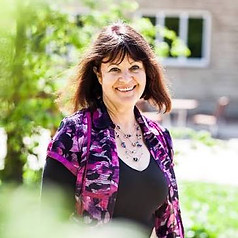
Cheryl Mattingly, Ph.D. - Medical Anthropologist and Author
Cheryl Mattingly is a Professor in the Departments of Anthropology and Philosophy, Aarhus University and Professor of Anthropology (Emerita), University of Southern California. Interests: critical phenomenology, the anthropology of ethics, medical and psychological anthropology, narrative, chronic illness and disability, health disparities, race and minority health.
She is President Elect of the Society for Psychological Anthropology. Her primary research has been in the United States. She received an honorary doctorate from Aarhus University (2019), and a 2017 Guggenheim Fellowship. Publication awards include: the 2015 New Millennium Book Prize for Moral Laboratories, the 2011 Stirling Book Prize for The Paradox of Hope, the 2000 Victor Turner Book Prize for Healing Dramas and Clinical Plots and the 1998 Polgar Essay Prize for “In Search of the Good.” She has co-edited several books including Imagistic Care: Growing Old in a Precarious World (2022); Moral Engines: Exploring the Ethical Drives in Human Life (2018), Narrative and the Cultural Construction of Illness and Healing (2000).
Keynote Presentation: Staying With Surprise: Narrative and the Emplotment of Perplexity
I will consider surprise as a generative and disorienting experience that sometimes reveals possibilities for personal and social transformation. Drawing upon a long-term ethnography of families raising children with chronic illnesses and disabilities, I explore how people in our study called upon and sometimes enacted narratives to stay with surprise. What does narrative offer as an everyday aesthetic form that allows people to revisit an eventful moment, one that perplexes them? How can it offer a “perspective by incongruity” that disturbs taken for granted diagnostic and disability categories or the stigma attached to them? I take up these questions concretely, in relation to two families. One has a child with autism. The other has a child with cerebral palsy who is profoundly affected both cognitively and motorically. Both children face significant societal obstacles which their parents struggle to address in many ways, including through the poetics of narrative.

Tom Carlson, Ph.D. - Professor, Branch Director, Alliant International University
Tom Carlson is a professor in the Couple and Family Therapy Program at Alliant International University and co-editor of the Journal of Contemporary Narrative Therapy. For more than two decades, his work has focused on exploring what makes narrative therapy transformative and on developing contemporary narrative practices in close collaboration with David Epston and colleagues around the world. Tom is co-author of Reimagining Narrative Therapy Through Practice Stories and Autoethnography and So You Want to Do Narrative Therapy? His work brings together narrative theory, ethics, and practice, with particular attention to the kinds of questions and conversations that open new possibilities for identity, relationships, and preferred ways of living. At CNTC 2026, Tom will invite participants into the living and evolving edge of contemporary narrative practice, exploring how curiosity, carefully crafted questions, and close attention to people’s lived experience can create possibilities that no one-size-fits-all approach could anticipate.

Sanni Paljakka- Narrative Therapist and Author
Sanni Paljakka is a psychologist and Director of Training at the Calgary Narrative Collective. Her labors of love in life are divided into two intertwined "philosophical laboratories": her own therapy practice among clients from all walks of life, and the deeply felt responsibility of good teaching and training for the new generation of students of Narrative therapy. To that end, she writes, publishes and co-edits for the Journal of Contemporary Narrative Therapy with a particular interest in writing therapeutic documents, the notion of "love" and its absence in modern relationships, and the wicked therapeutic and moral dilemmas that arise in her work with both her clients and students. Sanni is the primary author of the book entitled "So You Want to do Narrative Therapy? Letters to an Aspiring Narrative Therapist" published by Routledge Press in 2024. The book represents a unique thinking guide to a reimagined narrative therapy that seeks to return rich story development to its rightful place at the center of thoughtful deliberation-of-life in narrative therapy practice.

Travis Heath- Narrative Therapist and Author
Travis is a licensed psychologist and is an Associate Professor at San Diego State University where he serves as Chair of the Department of Counseling & School Psychology. His most recent work involves incorporating the work of Black abolitionist scholars into psychotherapy, community healing, and uprising. His writing has focused on the use of rap music in narrative therapy, working with persons entangled in the criminal injustice system in ways that maintain their dignity, narrative practice stories as pedagogy, a co-created questioning practice called reunion questions, and community healing strategies. He is co-author, with David Epston and Tom Carlson “Reimagining Narrative Therapy Through Practice Stories and Autoethnography" released in June 2022 entitled. He also completed a video series of his clinical work in June of 2024 for Psychotherapy.net entitled, “Reimagining Multiculturalism: A Contemporary Narrative Approach.
Keynote Presentation: Questions We Haven’t Learned to Ask: Escaping Social Knowing in Therapeutic Conversations
\What makes a question a good question? And how often are our questions shaped by what we have already been taught to believe about people, problems, and the world?
In this interactive workshop, we will explore how the questions therapists ask can sometimes reinforce assumptions we barely notice. Drawing from therapy conversations and some unusual experiments, we will play with ways of asking questions that interrupt what seems obvious, get around what we think we already know, and open possibilities for people to understand themselves and their lives differently.
Rather than searching for the “right” question, we will explore questions that invite surprise, curiosity, dignity, and possibility.

Iman Dadras, Ph.D. LMFT - Closing Keynote Speaker
Iman is an associate professor of Couple and Family Therapy program at Alliant International University, Los Angeles. His clinical and research interests are the sociopolitical ideology of the therapist, racial and political countertransference in therapy, and politics of psychotherapy in the neoliberal epoch.
Keynote Presentation: From techno-mechanical crucifixion of therapeutic language to resurrection of signifier: What Lacan and Heidegger offer Narrative Therapists
Language and speech are subjugated by the dominant discourse or ideology of a given zeitgeist. In the contemporary techno-fetishism of therapeutic culture, the intersubjective linguistic exchange between therapist and client is mainly subjected to the therapist’s logic of technique.
Lacan argues that the “unconscious is structured like a language” and that the subject is an effect of the signifying chain rather than its omnipotent author. Heidegger, from an existentialist approach, proposed that language is not a tool for communication but "the language is the house of Being".
Integrating Lacan and Heidegger, this presentation argues for a radical break with the contemporary commodification of language in therapy room, which is fixated on feeling, cognition, and diagnosis in isolation, thereby overlooking language's both unconscious and existential dimensions. This presentation explores a more ontological question beneath every clinical question: not “what” a good question therapist should ask, but what the act of “questioning” itself does to the space between speaker and listener, or whether therapy needs “questioning” at all.